


Hazelnuts: starting again after the harvest
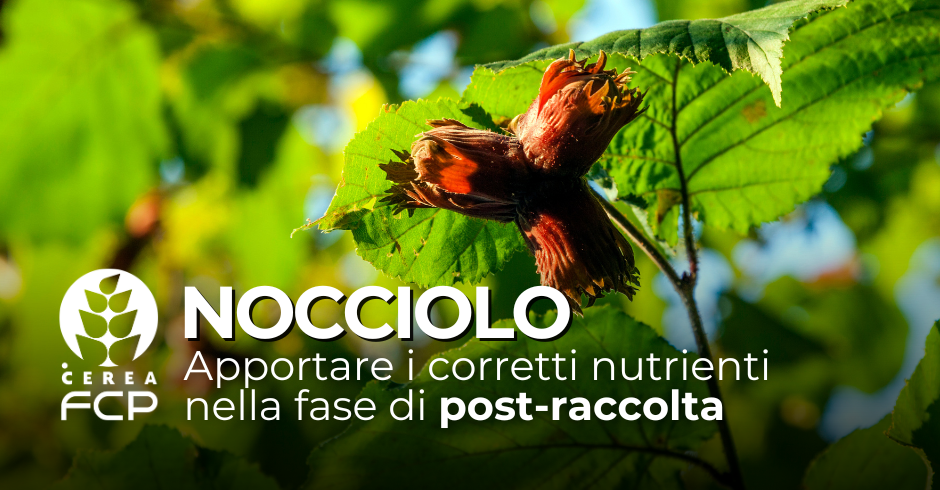
In hazelnut cultivation, the post-harvest phase is particularly important because, as well as replenishing what has been depleted by the year’s production, it is necessary during this period to provide the correct nutrients to promote the forthcoming flowering in January–February. Proper fertilisation of hazelnut trees during the post-harvest period helps to replenish the plant’s nutrient reserves, support root system activity and prepare the hazelnut orchard for a more balanced and productive growth spurt in the following season.
The fertilisation plan recommended by FCP Cerea involves the use of Ortofrutto Special, an organo-mineral NPK fertiliser which, thanks in part to the slow-release organic nitrogen it contains, ensures the gradual uptake of nutrients during the winter months and helps to increase the organic matter content of the soil. Furthermore, a good supply of organic matter promotes soil fertility, improves nutrient efficiency and supports root development.
Additional applications, both via foliar spraying and fertigation, are also recommended.
Here are our nutritional recommendations:
GRANULAR FERTILISER
ORTOFRUTTO SPECIAL 300-400 kg/ha
FOLIAR APPLICATIONS
GIOVE BIO GOLD 1,5 - 2 kg/ha
ORO-B 1-2 l/ha + HYDRONOVA BTC 2-2,5 l/ha
FERTIGATION
NANO.T FE 4-5 l/ha + SUPREMO 15-20 l/ha
In the case of soils with an alkaline pH and/or a high active limestone content, which are prone to iron chlorosis, it is also advisable to apply the following via fertigation during the stages of vegetative growth, fruit set, fruit development and post-harvest:
NANO.T FE 4-5 l/ha + SUPREMO 20-25 l/ha
Once the iron nanoparticles contained in Nano.T Fe have been applied to the soil, they bind to the soil colloids, preventing leaching. The plant can thus absorb them as and when it needs them, even over the long term.
Combining it with Supremo, a pure form of haemoglobin rich in organic iron, enhances its effectiveness and its effect on the plant.
FOR THE FULL TECHNICAL RANGE CLICCA QUI