


Nano chitosano promotes growth, resulting in stronger and more resilient plants
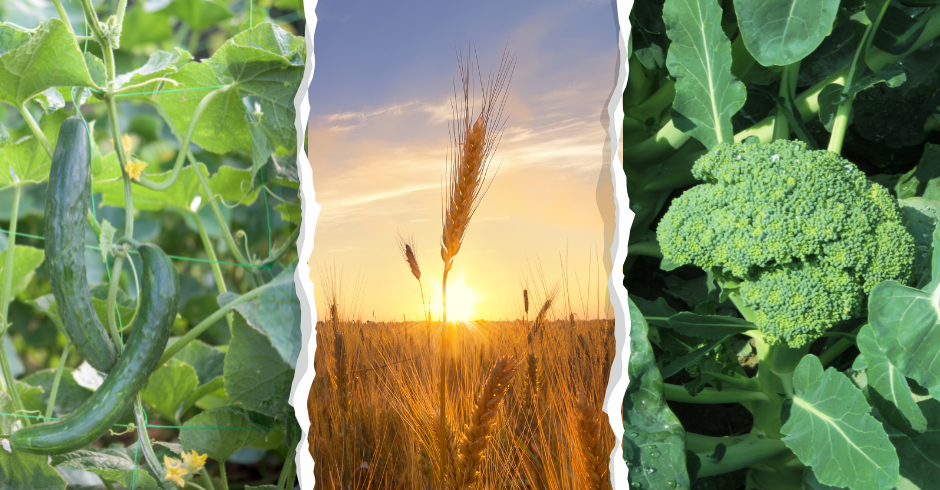
Fcp Cerea has tested the effectiveness of Nano.T® Chitosano on wheat, cucumber and broccoli. The results of the laboratory tests confirm its ability to support the plant from the earliest stages, even under water stress

Nano.T® Chitosano represents a technological advancement over traditional chitosan: it is a naturally occurring polymer, derived from chitin, used to enhance plants’ ability to withstand various stress conditions.
Thanks to its nanoscale structure, the formulation ensures significantly faster and more efficient penetration into plant tissues than conventional versions.
Experimental results 2025: tests carried out at the FCP CEREA laboratories
During 2025, we carried out studies aimed at assessing the product’s effectiveness under water-stress conditions, as well as its effects on germination and the formation of stronger, more resilient plant tissues.
TEST OF WATER STRESS TOLERANCE IN SOFT WHEAT
The aim of the trial was to analyse the effectiveness of Nano.T® Chitosano, applied as a foliar spray at two different dosage levels, in improving the plants’ ability to adapt to water-deficient conditions.
The trial was conducted on soft wheat.
Method
Over the course of a month, several treatments were carried out in our growth chamber, starting from the post-emergence stage. To simulate drought conditions, the irrigation volume was reduced to 50% of the crop’s standard water requirement (Table 1).
Number of replicates: 7.

Tabella 1. Thesis on the wheat trial. (Fonte: Fcp Cerea)
At the end of the stress phase (induced water deficit), all treatments were returned to optimal irrigation conditions, restoring the correct water supply. The parameters analysed included the number of culms and recovery capacity, assessed visually using a time-lapse system that captured one image every hour throughout the duration of the experiment.
RESULTS
- Speed of recovery: the plants subjected to the treatment (experiment 3: 250 ml/100 L of water) showed a significantly faster post-stress recovery compared with the untreated control (experiment 2) (Fig. 1). Click here to watch the video.


Figura 1: Wheat plants during the water-stress phase (in pots 2 and 3) and in the subsequent recovery phase. Note the greater vigour shown during recovery by the treated sample (pot 3) compared with the untreated sample (pot 2). (Fonte: Fcp Cerea)
- Vegetative growth: the number of culms recorded in the experiment under consideration (Experiment 3) was found to be significantly comparable to that observed in plants not subjected to stress (Experiment 1, CTRL+), as shown in Figure 2.

Figura 2. Number of culms per treatment at the end of the trial (P ≤ 0.05). Treatment 3 (treated with Nano.T® Chitosano) does not differ statistically from the unstressed control (CTRL+). (Fonte: Fcp Cerea)
Optimisation of germination (root development) using two different application methods
Technique 1: priming
The product was applied using the priming technique: for each treatment, 20 seeds were selected, sterilised with alcohol and then rinsed with water. The seeds were then immersed in a solution of Nano.T® Chitosano (125 ppm). After one hour of treatment, they were removed from the solution and left to dry at room temperature. They were then placed in Petri dishes on filter paper moistened with 2 ml of water.
The seeds for the control experiment followed the same protocol, with the sole difference being the absence of treatment with Nano.T® Chitosano.
Cucumber trial
The aim of the trial was to assess the effectiveness of Nano.T® Chitosano on root elongation 3 days after sowing.
Results
Plants treated with Nano.T® Chitosano showed an average root length approximately 20% greater than that of the untreated control.

Figura 3. Average root length at the end of the test. The study shows that the roots were longer than those in the control group. (Source: Fcp Cerea)
Wheat trial
The aim of the trial is to assess the product’s effectiveness in terms of increasing the weight of germinated seeds and root length, 3 days after the treatment.
Results
The study shows an increase in both the weight of germinated seeds and root length compared with the untreated control, with values approximately 10% higher for both parameters (Figs. 4 and 5).

Figura 4. Average weight of germinated seeds at the end of the test. Following treatment with Nano.T® Chitosano, there was a 10% increase in average weight. (Source: Fcp Cerea)

Figura 5. Average root length at the end of the test. Following treatment with Nano.T® Chitosano, the total root length was on average 10% longer than that of the untreated control. (Source: Fcp Cerea)
Technique 2: application near the seed
A trial on wheat to assess the product’s efficacy in terms of the weight of germinated seeds and root length 3 days after treatment.
The product was applied directly to the Petri dish containing the seeds, thereby simulating a treatment at the time of sowing.
Results

Figura 6. Average weight of germinated seeds at the end of the test. Following treatment with Nano.T® Chitosano, there was a 13% increase in average weight. (Source: Fcp Cerea)

Figura 7. Average root length at the end of the test. Following treatment with Nano.T® Chitosano, the total root length was on average 15% longer than that of the untreated control. (Source: Fcp Cerea)
Increase in dry matter (broccoli)
During 2024, a trial was conducted on broccoli in a growth chamber, with the aim of assessing the effectiveness of Nano.T® Chitosano on crop weight.
Method
The product was applied at a dose of 4 ml on three occasions: at transplanting, after 5 days, and then a further 5 days later. The trial was carried out in duplicate.
Results
One and a half months after transplanting, the plants treated with Nano.T® Chitosano showed a significant increase in the dry weight of the aerial parts, with values approximately 45% higher than the untreated control (NT) (Fig. 8).

Figura 8. Average dry weight at the end of the test. Following the application of Nano.T® Chitosano, there was a 45% increase in the dry weight of the aerial parts after one and a half months. (Source: Fcp Cerea)
Concluding remarks
The foliar application of Nano.T® Chitosano has proved highly effective in mitigating the effects of water stress. Treated plants show a faster recovery following stress and a number of tillers that is statistically comparable to that of plants grown under optimal conditions, significantly reducing the gap caused by water deficiency.
Nano.T® Chitosano also promotes more vigorous growth right from the early stages of the growing cycle. In cucumber and wheat, the priming treatment resulted in an increase in both root length and the weight of germinated seeds compared with the untreated controls. In wheat, application at sowing yielded even better results.
The trial on broccoli also confirms the positive effect of nano-chitosan on plant structure: the treatment showed a marked increase in the dry weight of the above-ground parts, indicative of greater robustness and adaptability to environmental stresses, as well as improved crop quality in the pre-harvest phase, even under conditions of limited water availability.
Overall, Nano.T® Chitosano represents a significant technological advance over traditional formulations. Thanks to its superior penetration and reactivity, it stands out as a versatile and effective solution for modern agriculture, which is called upon to tackle the challenges of climate change, helping to ensure healthier, more resilient and more productive crops, even in difficult environmental conditions.