


Broccoli nutrition: a targeted strategy for healthy, compact flower heads
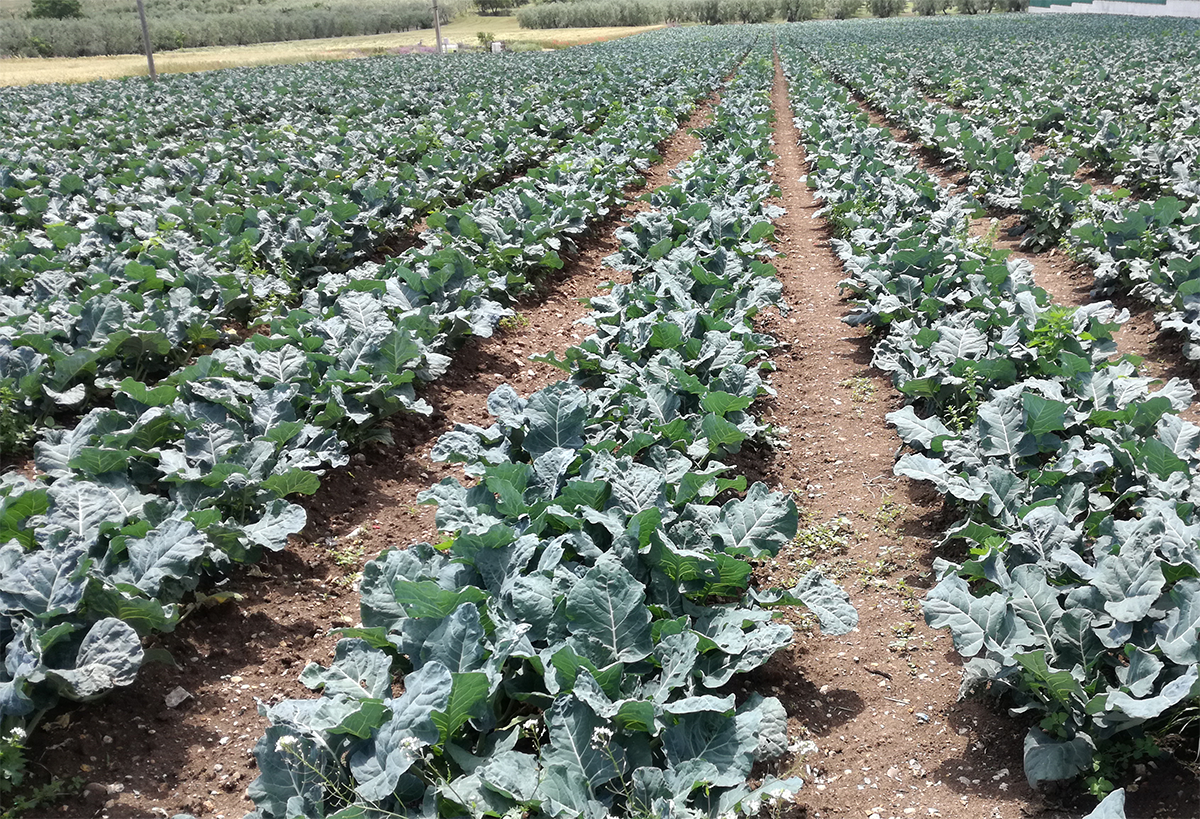
A key aspect of broccoli cultivation is producing high-quality ‘heads’; this means they must be: compact and firm, healthy and free from blemishes, with a rich colour, heavy and with a long post-harvest shelf life.
The aim is to achieve high-quality yields with medium-late varieties, which generally have to cope with difficult climatic, cultivation and environmental conditions.

Fertilising broccoli: how to promote the formation of high-quality flower heads
Broccoli is a crop with high nutritional requirements, particularly in the stages leading up to the formation of the corymb. A balanced nutrient supply supports vegetative growth and promotes the production of compact, uniform flower heads.
Nitrogen, phosphorus and potassium: the key elements
During vegetative growth, broccoli requires a good supply of nitrogen to rapidly develop leaves and biomass. Phosphorus promotes root activity and the plant’s energy processes, whilst potassium contributes to physiological efficiency and stress resistance.
As inflorescence formation approaches, potassium takes on an even more important role, helping the plant to direct resources towards the corymb and improving its texture and marketable quality.
Among the secondary elements and microelements, calcium and boron deserve particular attention. Calcium contributes to tissue strength and the final quality of the crop, whilst boron is essential for the proper development of the inflorescence and for preventing physiological disorders that may compromise the product’s commercial value.
Nutrient management
To achieve optimal results, it is advisable to apply nutrients gradually throughout the growing cycle, adapting the rates to the different stages of development. Irrigation management is also
Below is our protocol for autumn transplants
Initial fertilisation:
BLURAIN (300-350 kg/ha)
or
BLU ACTIVE 350-400 kg/ha
After 10 days from transplanting:
VERV N9 20 l/ha + LEAF P-Ca 10 l/ha (Fertigation)
After 25 days from transplanting:
VERV N9 20 l/ha + LEAF P-Ca 10 l/ha+LEAF N-FAST 20 l/ha (Fertigation)
Mid-cycle (approximately 40 days after transplanting)
EVOLUTION 56 150-200 kg/ha
60 days after transplanting (approximately 15–20 days before harvest)
LEAF P-Ca 10 l/ha+LEAF N-FAST 20 l/ha +CALCITO 10 l/ha (Fertigation)
Would you like to find out about the full technical range?