



Cultivation and Fertilization of the Mandarin
The mandarin (Citrus reticulata) is one of the most appreciated and widely cultivated citrus fruits in Italy, with significant productive potential.
It is a small fruit tree that rarely exceeds 3–4 meters in height. It has a deep root system which, once fully developed, gives the plant remarkable strength and resilience.
Soils and Cultivation Areas
The plant requires well-drained, fertile, and slightly acidic soils.
In Italy, the areas cultivated with clementines and mandarins account for about one-fifth of the country’s total citrus groves, with production mainly concentrated in Sicily and Calabria.
Main Challenges in Mandarin Cultivation
Like other crops, the mandarin is subject to the phenomenon of alternate bearing, meaning it alternates years of abundant fruiting with years of lower production. This intrinsic characteristic cannot be significantly altered but can be mitigated through appropriate fertilization practices.
Wind poses a significant threat: strong gusts can cause the loss of all the leaves, making it necessary to protect the plants with windbreak nets or hedges.
Particular attention should be given to protecting against fungi, insects, and snails/slugs; therefore, it is advisable to create conditions that help maintain the health of leaves, shoots, and fruits.
Nutritional Recommendations for Mandarin
The mandarin, like other citrus fruits, has a high demand for nitrogen (N) and potassium (K), distributed at various stages of the crop cycle. The supply of phosphorus remains important to support flowering.
Micronutrients, particularly iron, are required in small amounts but are essential to prevent deficiencies that cause chlorosis, stunted growth, and low productivity.
It is also important to supplement boron and calcium at the end of March or in April to support the development of flowers and young shoots. Fertilizers based on amino acids and with biostimulant action help reduce stress and improve the fruit’s quality parameters.
Follow our recommendations regarding dosages and application methods, specifically aimed at reducing iron chlorosis, increasing fruit set, and improving overall quality and shelf life.
PRODUCT POSITIONING BY PHENOLOGICAL PHASE - TRADITIONAL LINE
Products used in this phase






For problems of iron chlorosis, we recommend interventions with Nano.T Fe via the roots (or foliar). Dosage based on the soil's iron chlorosis index.
To strengthen the plant and make it more resistant to biotic and abiotic stress, we recommend using Nano.T Cu foliarly every 15 days from vegetative development onwards.
In saline, sodic, calcareous soils with an alkaline pH, add CALCITO at a dose of 10 l/ha every 25-30 days.
To create favorable environments for maintaining healthy leaves, shoots, and fruits, use Nano.T Total
PRODUCT POSITIONING BY PHENOLOGICAL PHASE - ORGANIC LINE
Products used in this phase

For iron chlorosis problems, we recommend applying Nano.T Fe BIO through the roots (or foliar). Dosage depends on the soil's iron chlorosis index.
To strengthen the plant and make it more resistant to biotic and abiotic stress, we recommend using Nano.T Cu BIO foliar application every 15 days from vegetative growth onwards.
Need assistance?
The use of products that strengthen the abscission zones (the fruit stem) is ideal for reducing fruit drop. Nano.T CaPO helps increase calcium pectates in the peduncle, counteracting fruit drop and improving the transfer of nutrients to the fruit.
It is recommended to use highly available iron-based products, especially in calcareous, sodic, alkaline, or saline soils and water conditions. Nano.T Fe and Nano.T Fe Bio provide iron that remains fully available to plants even in “difficult” soil and water conditions. These products are also non-leachable and non-photolabile, ensuring a steady and prolonged release of iron.
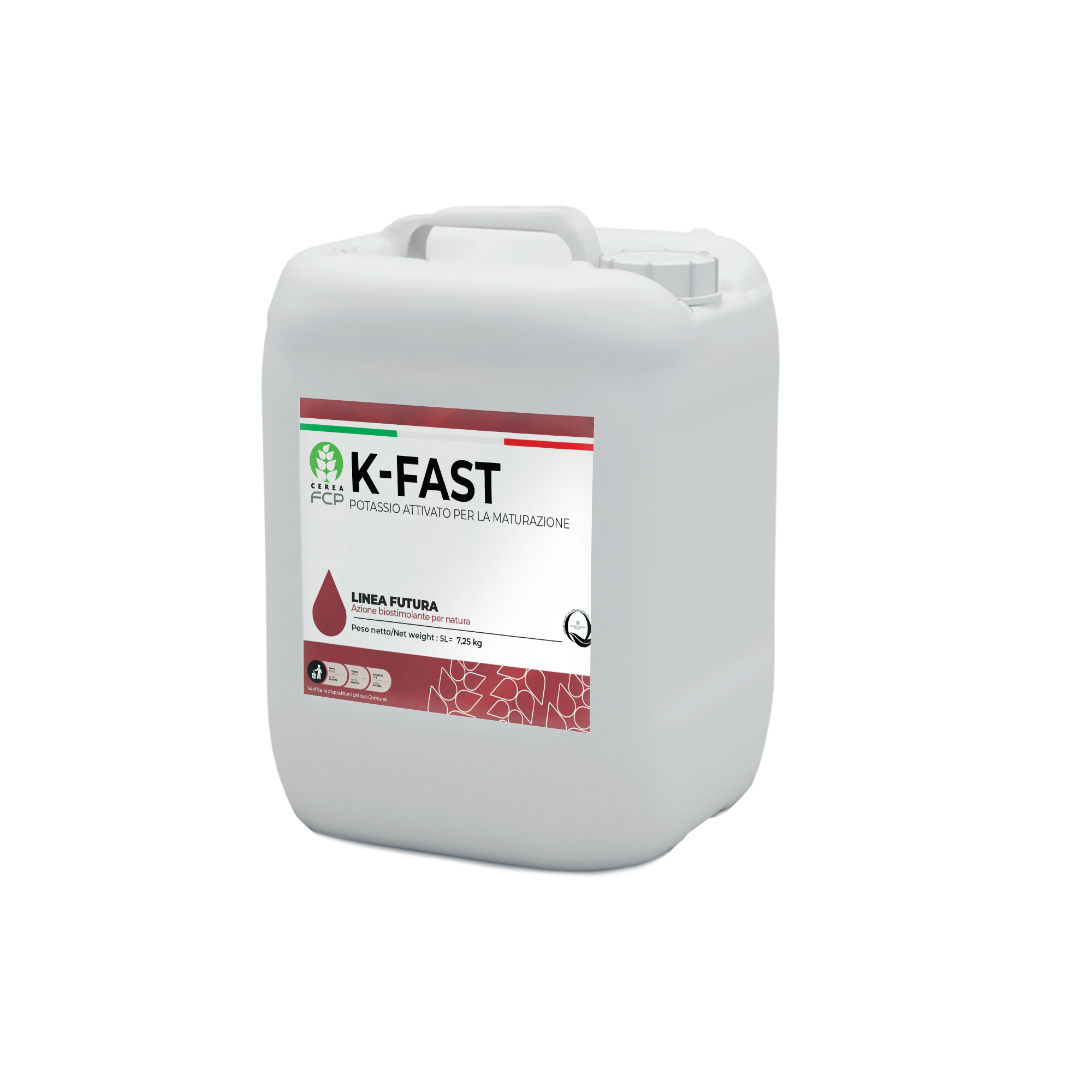
The color development of citrus fruits mainly depends on temperature fluctuations. However, using highly assimilable potassium-based products helps achieve a more intense and uniform coloration. The use of K-Fast (for root application) and Leaf K (for foliar application) is ideal in this regard, as they supply highly available potassium — K-Fast combined with humic extracts, and Leaf K containing acid-reacting potassium with betaines.